


Genre:
Life Simulation
Developer:
Alex Masse and team
Publisher:
Paralives Studio
Platforms:
Steam
Introduction:
Right off the bat, this is an early access game, not a finished product. The expectation is to come across bugs, incomplete features and placeholders. With one game franchise absolutely dominating this genre, it’s hard not to compare this game to that, which isn’t entirely fair, an early access game vs an established domination, is a bit of a David vs Goliath situation.
The project started in January 2019, when developer Alex Masse, quit his job and started working on game ideas as a solo developer, Paralives was funded through its Patreon, now nearly 27000 members, which over time allowed Alex to grow his team to 13 members to make his dream game a reality.
I was late to the party, as a previous fan of The Sims and more recently Inzoi, YouTube’s algorithm served me up a slice of Paralives. I was intrigued by the vibe, the art style and some of the unique features ala curved walls. My sister was kind enough to purchase me a copy of the game once it was released to early access, and here is my verdict.

Narrative:
Being a life simulation game, the narrative is essentially whatever you want it to be, you create your ‘Para’, or ‘Para’s’ in your family and control their lives. You build their home, choose their job and almost all their decisions. Where Paralives is different from other life simulation games is the story teller mechanics, initially this appears to be just a fancy way to choose your difficulty, however, once you chose you story teller (Maxence (default) Richard Castello III (Hard) and even Stella the dog (sandbox/easy) (these are also able to be fine-tuned to your liking) you’re introduced to Story Card Packs, a bit like tarot cards. Each 24 hours, in game, you make a choice between 3 random card packs (out of 5 total in early access) and are then given 3 random story cards, each with an array of either cash bonuses, skill levels, romantic boosts, vacation days, instant items or status effects. It’s a neat feature and adds something to each day to keep it interesting.
Gameplay:
An aspect of this game, that took a little getting used to but I’ve grown to enjoy, is the communication between your ‘Para’ and other ‘Parafolk’, unlike other life sim games you don’t just spam as many dialog choices, you have to wait for the communication meter to fill up, then you’re given dialog options in the form of cards, to progress the conversation, choose an incorrect option, it has a negative effect on the Para’s relationship, it adds a weight to conversations, and when you do get it wrong, it sometimes hurts. With other games, I’ve always found you can just push through conversations, manipulating them to get the result you want, with this, it’s much more of a challenge, which is a good thing. To balance off having to wait for the bar to fill up, you can multitask, my Para will happily continue their conversation whilst practicing programming for example, I haven’t noticed this slowing learning down, which would be a nice touch as, some of us, certainly myself, cannot multitask at the best of times, let alone whilst programming. There has been some negativity around the card communication mechanic, but the developers have already said this is a mechanic which is staying in the game, they have a feature that they believe in and it’s great to see they’re not bowing to pressure. This mechanic makes it stand out, and personally I like it, I don’t think you are going to challenge a giant of a genre just by copying them. I will say that now the dialog options are liner, it seems that when my characters are communicating, there is a lot of repetition.
The map is essentially open world; you can zoom out of your property and select a shop and after a short amount of loading time (usually by the time your Para reaches it) the lot is accessible. The map also contains collectables, mushrooms and ores, mainly and also the odd buried chest, again it’s a neat feature where you can collect the items, donate them to the museum, this gives you bonus items and financial boosts, you can also get similar benefits from donating rarer items to the community center however, with the added bonus of restoring it to its former glory.
The building mechanics takes a fair bit of getting used to, some of the flexibility, like changing the size of almost every item, are fantastic and once you do get used to it, building décor is a breeze. I’m excited to see these tools experimented with and see what people can create. I found it easy to create a corner sofa combining two of the same sofas together and adjusting their size for a relatively perfect fit. You could spend hours making every little detail perfectly, size, shape, colour, pattern even uploading your own photos to certain items like picture frames but also you can throw together something that looks half decent relatively swiftly. I’ve built 3 properties of different styles to get a feel for the mechanics. One thing I have found is using curved walls became more frustrating after the initial interest. Maybe it’s my lack of toolset skills, but I always seemed to end up with a spare bit of wall that was painted the same as the next room, almost as if the curved wall must be contained in a room. It’s something I will continue to play with and try to get working in future builds. Another thing I found is the area you’re building in, doesn’t seem sectioned correctly, I built a townhouse, fitting in between two already established buildings. The squared off area didn’t seem to fit correctly, and I had to build at odd angles to fit walls in, the final results ended up not looking too bad but I feel it would have been a lot simpler to be able just to use the already in place neighboring walls and just add the front and back walls to create a room.
The careers system seems a lot more in depth than other life simulation games, to apply for jobs you need to achieve a certain number of points over different categories, to achieve a required total before you can even apply. Once an application is successful, you even get to choose your start time, out of a few options, which is handy if you like a lie in. Once in a job, your rank goes up using a simple performance meter, allowing for promotions. My Para was able to jump between several different jobs in his selected field and get upgrades to rank and promotions regularly. However, underperforming Para’s receive strikes, if you get 3 strikes, yourrrr out! You get sacked basically. Jobs also pay out daily, which is handy.
Building my ‘Parafolk’ was a decent enough experience, a lot of features to change size and all sorts of shapes, I’m sure the internet is going to feature a lot of freaky looking characters with this building mechanic. Clothing options were basic and lacked detail. It does have editing features for items with colours and pattern choices, but the art style just made the clothes look a bit bland and boring. With future additions promised I hope these will boost my interest in the clothing options.


In Short and final verdict
Graphics
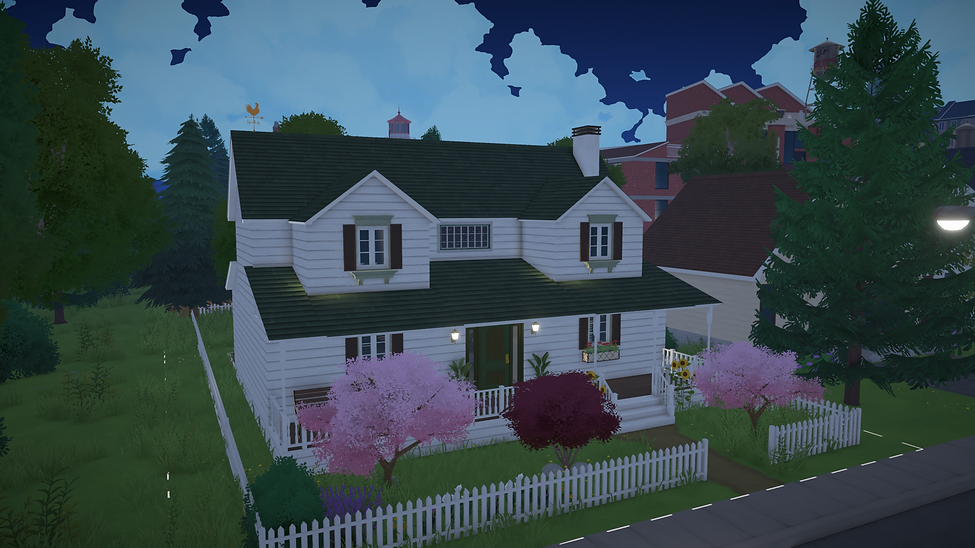
Cozy, cartoony art style that draws inspirations from classic Disney and studio Ghibli. It won’t be everyone’s cup of tea but I think the simplicity gives the graphics longevity and overall it does look whimsically good.
Sound
Soundtrack giving those cosy, chill vibes, The Para’s have Para-language which is okay, i don’t seem to hear anything when they’re playing an instrument though, which is a shame.
Gameplay
I enjoy the gameplay, especially the aspects that make this game stand out, the daily card packs, conversation cards, collection challenges and Parafolk ‘quests’ add to the gameplay after I’ve spent most of my time building properties (my favorite aspect of mist Life sim games).
Story
The story is what you make it, with the storyteller cards helping or hindering your days.
Performance
Not too bad, in my 16 hours so far, I’ve had to report on a major bug where the auto save feature failed to save, it also was constantly attempting to save, which meant I was unable to complete a manual save and after 2/3 in days I had to quit out and lose that progress. Other than that, I’ve experienced little quirks, like Paras blending together or Para’s running through walls or taking strange routes to their next destination, like up a steep hill and through a wall instead of the gentler inclined pathway.
Final Score
Early access is a chance to play an early version of a final full release, and this is exactly what I would describe this game as. It has a lot of promise, after a fantastic launch into early access, it’s announced accelerated changes and updates to come. I very much enjoyed the difference mechanics that make this game stand out from its competitors, but it lacks depth and polish in several areas. Paralives is all about potential, and I believe it has so much potential that it could even topple Sims as the number one in Life simulation.
